


Article at a Glance:
What is the most common real-world mistake or misconception you see clients (or general contractors) make when approaching low voltage design in a Progressive Design-Build (PDB) project?
Qualifications-Based Selection: PDB shifts the focus away from picking the lowest bidder. Partners are selected early in the design phase based on qualifications, experience, and performance.
Phased Pricing Structure:
Phase 1 (Design Development): The team establishes a good-faith cost estimate based on known scope, rather than locking in a Guaranteed Maximum Price (GMP) too early.
Phase 2 (100% CDs/IFC): The final GMP is set closer to procurement, significantly reducing pricing risk and variables.
Early & Continuous Collaboration: Bringing the build partner into the design phase eliminates ambiguity, reducing Requests for Information (RFIs) and costly redesigns during construction.
Low Voltage Scope Considerations:
Technology designers (structured cabling, AV, security, Wi-Fi) must continuously align subsequent design iterations with the initial scope estimated in Phase 1.
Specialized systems like Cellular DAS or Emergency Responders Radio Communication Systems (ERRCS) are typically handled by separate design-build partners because final signal testing requires physical walls/windows to be in place.
A low voltage design in a progressive design build project blends the traditional design-bid-build and design-build approaches to designing and building a commercial project. However, the approach does change some things for the design team. That is, the selection is made earlier in the design phase with more of an emphasis on credentials instead of a focus on the lowest bid. Therefore, the build partner is involved in the design phase.
Fifty years ago, the design-bid-build approach to designing and building commercial projects was the primary approach for commercial development. In the late 1970s the American Institute of Architects (AIA) repealed ethical prohibitions that had previously restricted architects from offering construction services. This began a wider adoption of the design-build approach in subsequent decades.
The Design Build Institute of America website states the history this way. “In 1993, design-build was considered a radical approach to project delivery and design-builders were seen by many in the industry as a threat to the status quo”. The status quo at the time was the Design-Bid-Build method. Since then, the Design-Build methodology grew in popularity to account for nearly 50% of all commercial projects.

In 2026, the Design-Build approach to commercial construction is considered equally as valid as the once dominant Design-Bid-Build. The decision of which approach to use is based on numerous factors including the owner’s desired involvement level, overall size of the project, project complexity, length of design & construction schedules, and government regulations.
Design-Bid-Build & Low Voltage Systems (DBB)
Since NTI was founded in 1998, most of our projects have employed the DBB approach. NTI’s low voltage design services most often include design of the structured cabling system, the security systems. As seasoned designers of low voltage systems for DBB projects NTI has expertise with the technology systems that rely on the low voltage infrastructure. This includes the security design, the WiFi design and the audio visual systems. Therefore, on occasion, NTI is also called on to provide procurement services and/or vendor installation oversight for selected low voltage systems. We prefer and most often serve as part of the architect’s design team, whether NTI is actually hired by the architect, owner or an owner’s representative.
Kayla Wagner is a project manager at NTI who has worked for owners, owner’s reps, and architects says it this way. “A major benefit of working for the architect is that we are part of the design team which means we are included in the design team’s email distribution list. It is advantageous because receiving the design team email keeps us abreast of milestones, deadlines and any issues at the same time as the rest of the design team.”
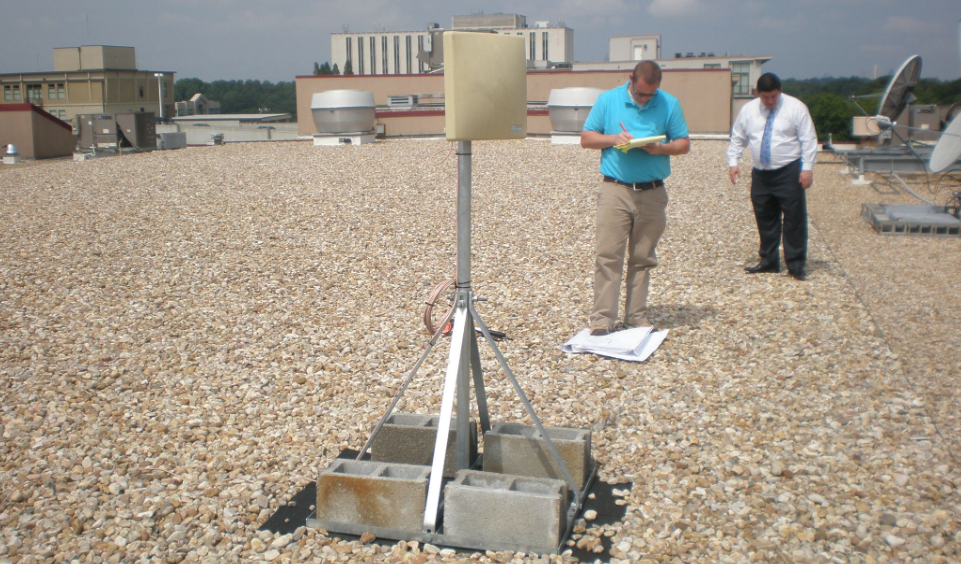
It is common to employ a design-build approach for wireless systems regardless of whether the overall design is a design-bid-build or a design-build. This is because signal strength cannot be definitively gauged until the walls and windows are in place. The final design is completed after a heatmap study during construction. NTI’s base scope includes a preliminary WiFi design as part of the 100% CD set, or IFC set. As needed, NTI can also deliver a predictive heatmapping report during design, and/or a final site heatmap during construction. Whether we are asked to provide heatmapping services, our base design scope includes required adjustments to the preliminary design.
Design-Build & Low Voltage Systems
The low voltage design as part of a design-build team will include the structured cabling system, WiFi systems (including the heat mapping), security systems and audio visual systems. If the project employs a DB approach, it is common for both the design and buildout services to be provided by the same company. The owner may hire them, however, there are occasions where an architect or an AE design team works with a Construction Manager to provide a complete solution.
With either a design-bid-build or a design-build approach, the low voltage design team’s scope of services often does not typically include a Cellular Distributed Antenna Systems (DAS), or the Emergency Responders Radio Communication System (ERRCS) DAS. These systems usually have a separate design-build partner. As is the case with the WiFi design, signal strength needs to be confirmed during the construction process prior to a final design.
Progressive Design-Build & Low Voltage Acceptance
In the early 2000s, the progressive design build (PDB) approach gained popularity as respected proponents of the design-build approach and the design-bid-build approach agreed on its value. Instead of a purely price-based selection, PDB offers a qualifications-based selection which has been adopted by many design-build professionals over time, and is considered as an innovative and efficient approach by the Design Build Institute of America (DBIA).
Per the AIA Trust website, “Progressive design-build addresses the unique demands of modern infrastructure projects while delivering enhanced value and innovation. It is a dynamic and collaborative model designed to improve efficiency, foster innovation, and streamline project execution. And because the progressive design-build approach uses a performance-based selection rather than relying solely on cost-based bidding, its use prioritizes qualifications, experience, and proven performance.”
NTI is a traditional design-bid-build firm, however since 2018 we have been far more involved with design-build projects. Two major reasons have driven NTI’s increased involvement with design-build projects. The first reason is the adoption and growth of the progressive design-build approach. The second reason is that NTI was acquired by a traditional design-build firm, ASD, Inc., in 2018. Although we remain an independent and objective design firm and are a subsidiary of a Design-Build firm, we now have access to previously unavailable services. This can be particularly valuable for a progressive design-build project because the NTI design then an ASD build solution provides a single company solution for an architect-led coordinated design, in conjunction with a performance-based build partner.
Kevin Kiziah, ASD’s CEO, saw the value of blending the two traditional approaches in 2018 when ASD decided to acquire a full service low voltage design firm. Kevin’s foresight created a single company that can provide any approach required, including a progressive design-build approach. “Before acquiring NTI, ASD had the opportunity to build projects designed by the NTI team, and we saw firsthand a level of thought leadership, technical expertise, and attention to detail that was unmatched in our industry. At the same time, we recognized a growing need in the marketplace for better continuity throughout the technology lifecycle—from early planning and accurate budgeting to design, construction coordination, testing, and long-term system support. Bringing NTI’s design excellence together with ASD’s implementation and service capabilities allows us to understand the client’s desired outcome, reduce gaps between design and construction, and support their systems throughout their entire lifespan. Our customers truly value having a partner who remains accountable from initial concept through ongoing maintenance.”
The intent of the progressive design-build approach is to address risk management and cost certainty. Traditional design-build often requires a fixed price early in the process. The variables associated with delivering a guaranteed maximum price (GMP) early in the process increases risk, especially in larger complex projects. The PDB approach reduces this inherent risk with early engagement of the Construction Manager or General Contractor, and a phased approach to arriving at a GMP, thus lowering overall risk.
The two phases of a Progressive-Design-Build are:
Phase 1 – A pricing exercise conducted during design development to establish a cost given the known scope and delivery timetable. This fee is not an agreed to guaranteed maximum price (GMP) but instead a best good faith estimate of the required costs given what is known at the time.
Phase 2 – After completion of the final 100% CD or IFC design set of drawings, the fee is revisited and a GMP is established.
Risk is reduced because a GMP is delivered closer to having to purchase material. Savings are captured during construction because there are fewer RFIs and redesigns because increased clarity of scope due to collaboration of design and build partners during the DD and CD phase of the project
There are a few differences for the technology/low voltage design partner.
- Once the selected build partner is determined and the good faith estimate is delivered, subsequent designs must account for the systems that were in scope for the good faith estimate of cost. This adds some effort, however the early collaboration between design team and build partner creates savings during construction which easily outweigh the additional efforts.
- There will be more collaboration with the build partner during the design phase. This may require a little more time but the coordination will eliminate ambiguity and confusion during construction.
- Once the final GMP price is established, there might be minor adjustments to design based on specific changes (cost/reward decisions) during final scope confirmation. The reason for these minor changes is different than in a DBB project, but it is not unusual for minor design changes to occur during construction. Therefore, there is rather little additional effort required.
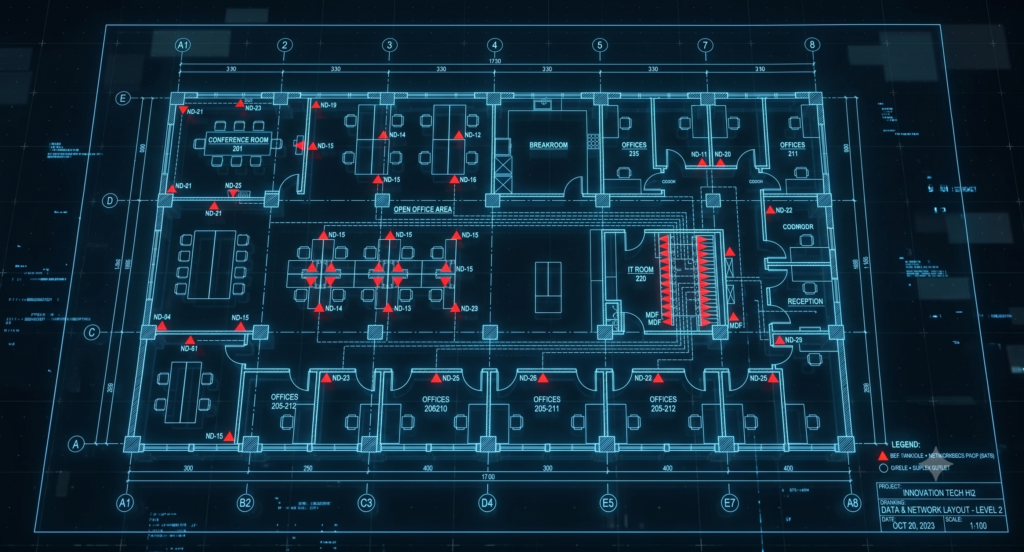
The traditional Design-Bid-Build approach may be managed by the owner, or have a project manager or owner’s representative (company employee or contracted) managing the project. The architect of record manages the design process and a selected build partner has responsibility for the build out. The traditional Design-Build approach may have a general contractor, construction manager or an AEC firm managing the project. In each of these approaches, the bid process conducted early in the process adds significant risk because a GMP is determined far ahead of the construction phase.
Owners now have another approach to consider for their next project. In some cases, their risk may be greatly reduced by employing a Progressive Design-Build approach, which selects both the design partner and the build partner based on credentials instead of primarily on the lowest price. This is why the PDB approach has grown in popularity and why it is supported by both the AIA and DBIA.