


Progressive Design-Build for Low-Voltage Technology
The Progressive Design-Build model for commercial developments is based on the belief that your building's technology systems shouldn't be designed in a vacuum, then handed off to a contractor who has never seen the intent behind them. That is why both the AIA which has traditionally championed the design-bid approach and the Design-Build Institute of America support the progressive design-build model.
With NTI and its parent company ASD, the people who design your low-voltage systems and the people who install them sit at the same table from day one. The result is a design that's buildable, a budget that's realistic, and a project that stays on schedule.
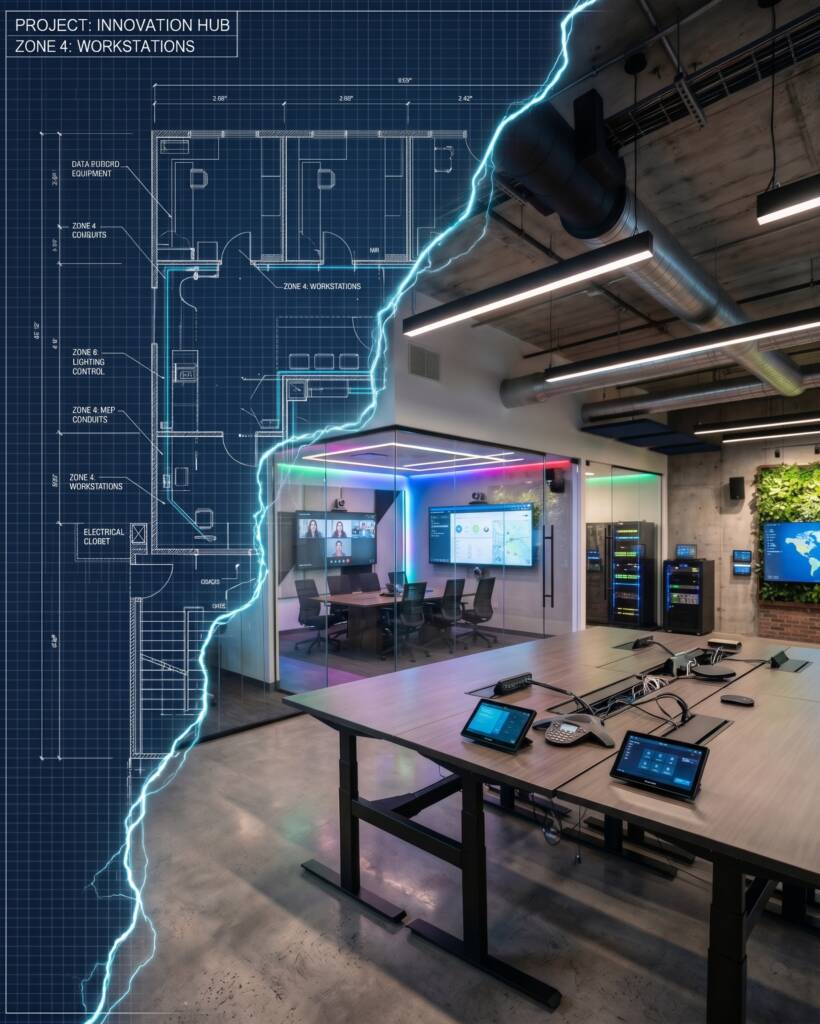
What Is Progressive Design-Build?
Progressive Design-Build (PDB) is a project delivery method where the owner selects a design-build team based on qualifications and best value, not lowest bid, and then works with that team to develop the design and the price together. Instead of locking in a lump-sum number on an incomplete drawing set, the scope, schedule, and budget are validated up front and refined as the design matures. For low-voltage technology, that means your structured cabling, security, audio-visual, and other technology systems are designed by a team that will also be accountable for building them.
Design-Build for Low-Voltage Technology
NTI's technology design expertise and ASD's bid-and-build experience, working as one team from first concept to final commissioning.
Delivery Method
Who controls design
How price is set
Common drawback for technology scopes
Design-Bid-Build
Owner’s consultant designs; contractor builds to it
Lowest bid on finished drawings
Designer and installer never collaborate; gaps surface as change orders
Traditional Design-Build
Owner defines scope up front
Lump sum on preliminary design
Scope uncertainty gets priced in, or turns into change orders
NTI + ASD
Design-build team develops scope with the owner
Developed collaboratively, validated against budget
Requires close, ongoing collaboration from all parties
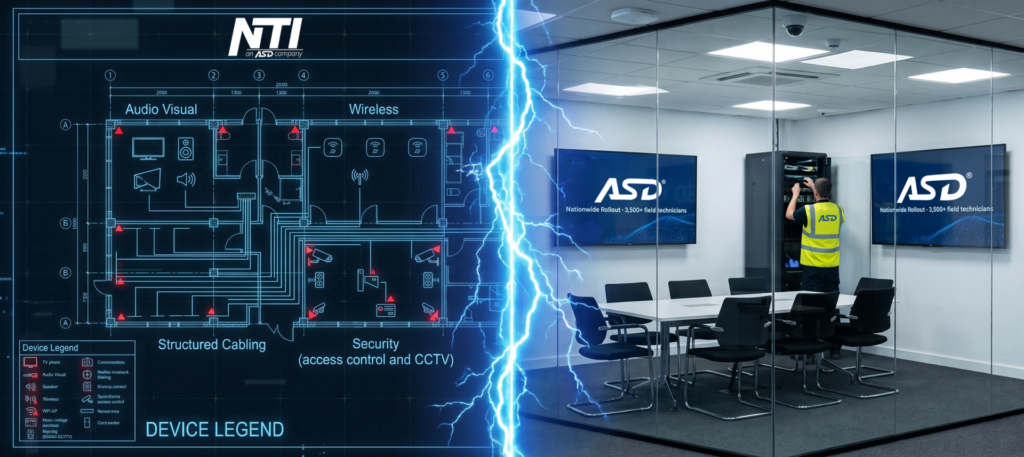
How a Progressive Design-Build project unfolds
Price is set twice: a good-faith estimate while the design develops, then a guaranteed maximum price once the documents are complete, close to when materials are actually purchased.
Qualifications-based selection
Good-faith estimate
Guaranteed maximum price
Construction
Why Choose Progressive Design-Build
For Owners
- You keep control. The owner keeps final say; the design-build team acts as an advisor throughout.
- Cost transparency. Consistent estimates show how design decisions affect the budget early, when changes are cheapest.
- Fewer change orders. Constructibility is addressed from the start instead of discovered in the field.
- Shared accountability. The design-build team leads coordination and takes responsibility for design errors, omissions, and quantity overruns.
- Collaboration that lasts. The dialogue continues through every phase, not just preconstruction.
For Architects
- A technology designer who already works like your team. NTI has worked on architects’ design teams since 1998, so fitting into your drawings and schedule is routine.
- Drawings that are buildable the first time. ASD checks constructibility during design development and construction documents. That means fewer RFIs and less redesign during construction administration.
- Budget answers at design milestones. The good-faith estimate shows what technology choices cost while the design can still change, not after bids come back high.
- Design intent carried into the field. The team installing the systems helped design them, so nothing gets lost in a handoff. For example, WiFi is finalized with on-site heatmapping once walls and windows are in place.
- An objective design voice. NTI remains an independent design firm, so its recommendations are based on what the project needs.
For General Contractors and Construction Managers
- One accountable low-voltage partner. Design and installation sit with one company. The design-build team takes responsibility for design errors, omissions, and quantity overruns.
- Pricing that holds. The GMP is set once the 100% CD or IFC set is complete, close to when materials are purchased. The number you carry reflects the real scope.
- Fewer change orders. Constructibility problems get solved during design instead of turning up in the field.
- Coordination handled. ASD leads low-voltage construction coordination, testing, and commissioning. Your team manages one trade instead of chasing a designer and an installer separately.
- Proven on tight schedules. At Dollar General’s 1,000,000+ GSF distribution center in Blair, NE, NTI designed and ASD installed the low-voltage systems on a four-month schedule.
NTI's Role in a Progressive Design-Build Project
Vendor-neutral design and oversight, whether the project is design-bid-build or progressive design-build.
A low-voltage design consultant designs a building's structured cabling, AV, security and wireless systems and produces construction documents for them. NTI is vendor-neutral, so we don't sell or install equipment. We plan, budget, design and document these systems, then oversee installation during construction to confirm contractors build what was specified.
As seasoned technology consultants and trusted advisors, we leverage decades of industry know-how to navigate the constantly evolving tech landscape for your project. Our role goes far beyond a simple design. We consult with your team every step of the way on the design and the technology systems that rely on the structured cabling infrastructure, applying our experience to deliver maximum value and foresight. Our primary goal is to ensure your building's systems function flawlessly on opening day while protecting your bottom line, eliminating costly tech-related mistakes on paper long before construction ever begins.
What changes with progressive design-build
When an owner selects a progressive design-build model, NTI's role does not change. However, the selected build partner can now provide cost estimates for the buildout during the design phase. As designers, we gain valuable information about the cost of completing the project. This helps eliminate unnecessary value engineering during or after the design phase and creates a smooth handoff from design partner to build partner when 100% construction documents are delivered.
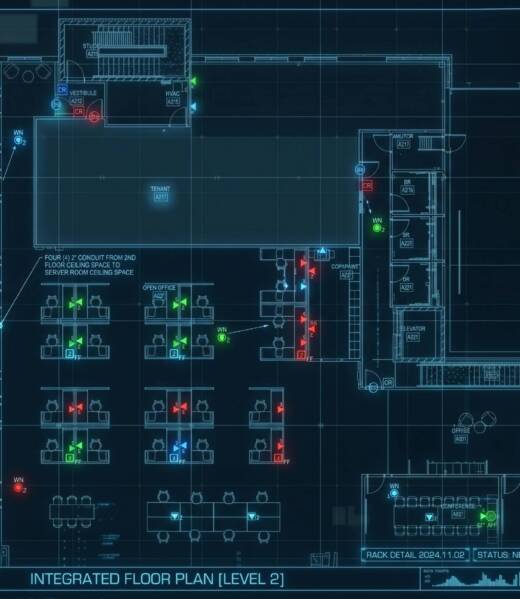

Since 1998, NTI has designed commercial low-voltage technology systems, primarily within architect design teams. Following its 2018 acquisition by ASD, Inc., NTI operates as an independent design firm paired with ASD's build capabilities. For Progressive Design-Build projects, this partnership provides architect-led technology design and performance-based construction from a single source.
"Before acquiring NTI, ASD saw firsthand NTI's industry-leading expertise and attention to detail. Recognizing market demand for seamless technology lifecycles—from budgeting and design to construction and long-term support—ASD combined NTI's design excellence with its own implementation capabilities. This union eliminates gaps between design and construction, delivering single-partner accountability from concept through ongoing maintenance."
Kevin Kiziah, CEO, ASD

NTI Design + ASD Build
Price is set twice: a good-faith estimate while the design develops, then a guaranteed maximum price once the documents are complete, close to when materials are actually purchased.
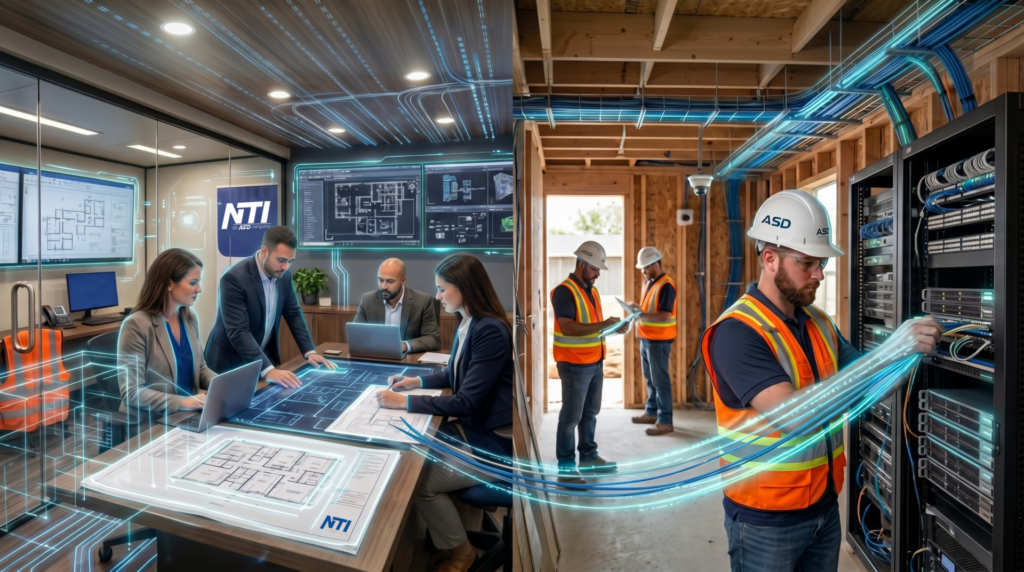
NTI Brings
- Structured cabling system design
- Security system design
- WiFi design, including predictive and on-site heatmapping
- Audio-visual system design
- Procurement and vendor installation oversight
ASD Brings
- Accurate early budgeting and pricing
- Installation and implementation
- Construction coordination
- Testing and commissioning
- Long-term system support and maintenance