


The senior living evolution embraced technology to meet demand driven by an aging population whose retirement years were approaching. The eldest Baby Boomers began thinking of their retirement early in this century, and senior living development began to change to accommodate the large wave of seniors who would be needing senior care in the foreseeable future. Baby Boomers are individuals born between 1946 and 1964. They represented over 26% of the U.S. population in 2006.
The first of the Baby Boomers reached their 65th birthday in 2011. Consider that the most common age when a senior citizen enters an assisted living facility varies between 75 and 84 years old. However, significant numbers of seniors enter assisted living in their late 60s or early 70s depending on health and other factors, such as the availability of independent senior living. It is clear to see why the Baby Boomers sparked a wave of change that transformed the senior living industry. NTI’s first technology design was started in 1998, so we have witnessed this evolution from the start.
A senior living development in 2025 is often a campus that provides a continuity of care with uniquely specific levels of expected or required services. Residents on campus require various levels of service, and technology plays a large part in the delivery of those services and care. Having a technology consultant working for the owner or as part of the design team is now critical to having the collective technology in new senior living developments work properly. The senior residents who will live in the facility may not be technology savvy, but the facility they will live in will be.
At it’s core, a senior living building or campus is a residential development, with amenities that are available to all residents. However, when the development is for senior living the overall desired and required amenities are more robust than a typical multi-family development unless the development is exclusively for independent seniors.
There are certainly many developments directed at independent seniors. In fact, a quick Google search can easily find numerous pre-retirement communities, known as 55+ active living. Communities built for people over 55 years of age range from resort level living for a mature population to basic independent living for senior citizens. These facilities do not typically offer the level of assistance or health care levels found in today’s multi-tiered senior living development. Companies that are known for designing and building full service senior living facilities provide a graduating level of service for seniors. And independent living is just the beginning.

The 3 basic levels of care in senior living community are:
– Independent
– Assisted Living and
– Enhanced Care.
The companies that design and build senior care facilities and campuses each define their continuity of care service levels a little differently. A few examples (per their individual websites) include:
Atria Senior Living – Offers 3 levels of service – Independent Living, Assisted Living, Memory Care.
Brightview Senior Living‘s – Offers 4 levels of service- Independent Living, Assisted Living, Memory Care, Enhanced Care.
Allendale Senior Living – Offers 4 levels of service – Level 1: Independent Living , Level 2: Basic Care , Level 3: Intermediate Care . Level 4: Advanced Care.
KISKO Senior Living – Offers 4 levels of service – Independent Living, Assisted Living, Heirloom Memory Care, Skilled Nursing.
The unique requirements of a senior living development call for an array of technology solutions, often found in many other industries. Standard amenities for independent seniors are similar to multi-family developments. Services in high end active senior resorts and attentive resident care resemble different levels of hotel guest services. And nurse care required for enhanced care services are the same as some found in clinics and hospitals.
These different levels of care bring all of these technologies into focus within a single senior living development.

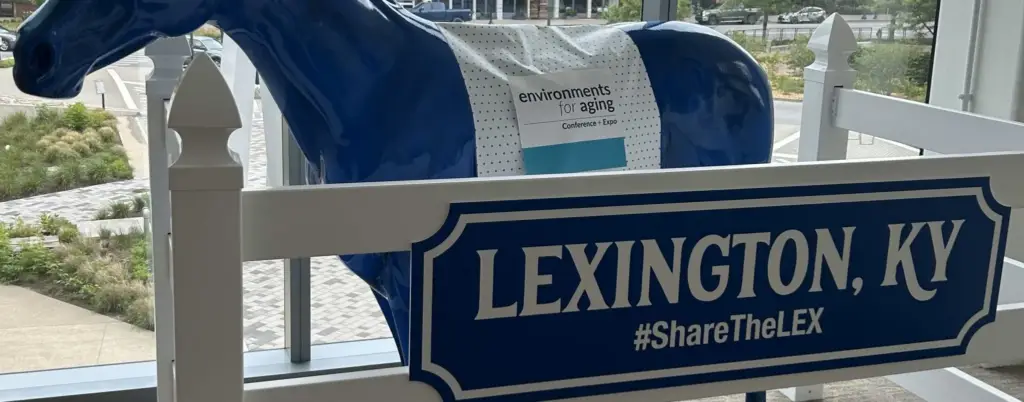
NTI recently attended the EFA (environment for aging) conference in Lexington, KY. Scott Dupuis (NTI Managing Principal) and Craig Coleman (NTI AV subject matter expert) both attended. Craig took part in the presentation, “Acoustic Accessibility: Enhancing Built Environments for Seniors”, led by Scott Davis from Hord Coplan Macht. At the conference, there were a host of senior solutions presented. Technology solutions were of course part of the offering.
Smart building solutions were there because nearly all new developments now consider smart buildings as part of their effectiveness and efficiency measures. Other solutions included monitoring the senior care of ambulatory residents who are not steady on their feet (trip/fall notifications), technologies to check the health of seniors (health monitoring), or to protect memory care residents (wander management systems). There were also creature comfort yet functional offerings such as wingback chairs with directional sound for the occupant.
Senior living facilities today are not the same as the assisted living of a generation ago. This is brought to light in an article in Senior Housing News, Senior Living Industry Grapples With Growing Number of Aging, Obsolete Communities. “According to NIC data, the average age of all senior housing properties is 24 years, while 60% are at least 17 years old. The older a community is, the more likely it has outdated exterior and interior design, poor infrastructure and lacks amenities often sought by today’s senior living customer.”
Hord Coplan Macht recently posted their top 10 trends for assisted living and memory care.
1. More neighborhood style assisted living facilities.
2. Increased Technology Usage
3. Attention to dining venue variety
4. Intentional outdoor spaces especially gardens
5. Blurred lines between assisted living and memory care
6. Smaller more defined spaces
7. Accessibility throughout the entire community
8. Rise intergenerational and multigenerational living
9. Resident’s children desire healthy, sustainable buildings
10. Renewed focus on the staff experience
The senior living evolution began 2 decades ago and is likely to continue as demand from active seniors and their family members drive ever more changes. Most predictions are that senior living will thrive in 2025, driven by a population whose demand is outpacing development. Worth noting is that the eldest of the Baby Boomers will turn 80 next year while youngest of them reached their 60th birthday in 2024.
McKnight’s Senior Living predicts there will be a shortage of 550,000 units by 2030, and that the pace of development needs to more than triple in order to catch up with demand. For those of us whose business is engaged with senior living development, predictions from those in the industry are encouraging.
Senior Housing News reports, “Senior living demand is high, supply is low, large lenders like Fannie Mae are more active and operational expenses are stabilizing – all conditions pointing toward a better year for investment activity in 2025.“.
MULTI-HOUSING NEWS reports, “Senior housing occupancy improved for the 15th consecutive quarter to 87.4 percent in the first quarter of 2025.”
Boutique Senior Living Fund – “The market is shifting toward intimate, tech-enabled communities that cater to the unique needs of today’s seniors. By staying ahead of the curve, you can not only maximize returns but also make a meaningful impact in the lives of residents.”

It has long been said that necessity is the mother of invention. The country’s aging Baby Boomers created a necessity for senior development sparking an evolution in the senior living sector. The future for senior living development is rosy for developers provided the investment can be secured to fund the required increase in the pace of development. Which of the predicted trends for senior living will happen is not yet known, but whichever trends come to pass, we are rather certain that designing and managing new technology will be part of every future senior living development.
About NTI
Since 1998, NTI has been planning for technology, estimating budgets, designing the infrastructure, creating drawings, and managing the implementation of technology systems for IT, AV, and Security Systems. As a result of NTI’s dedication to “Planning Before Building”, our clients receive sustainable technology solutions at the lowest total cost of ownership.