


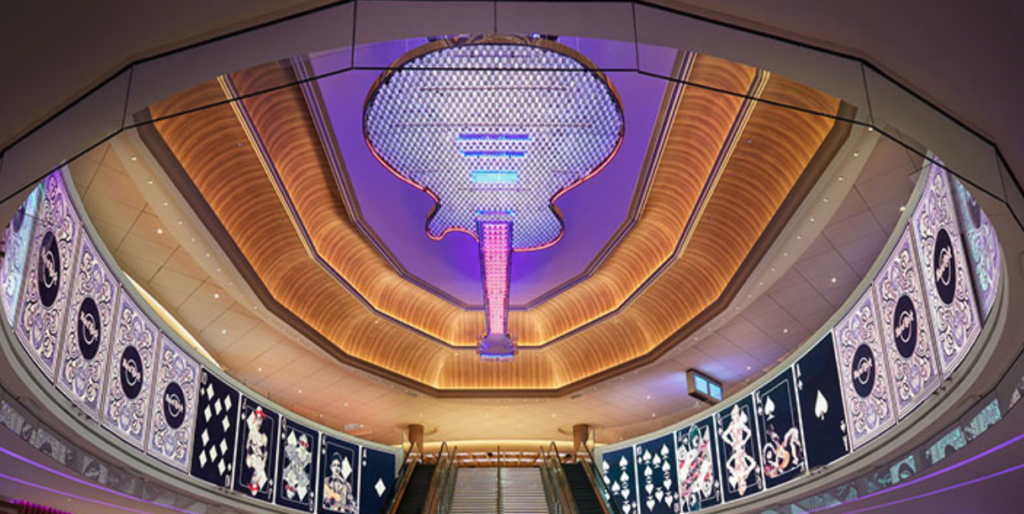
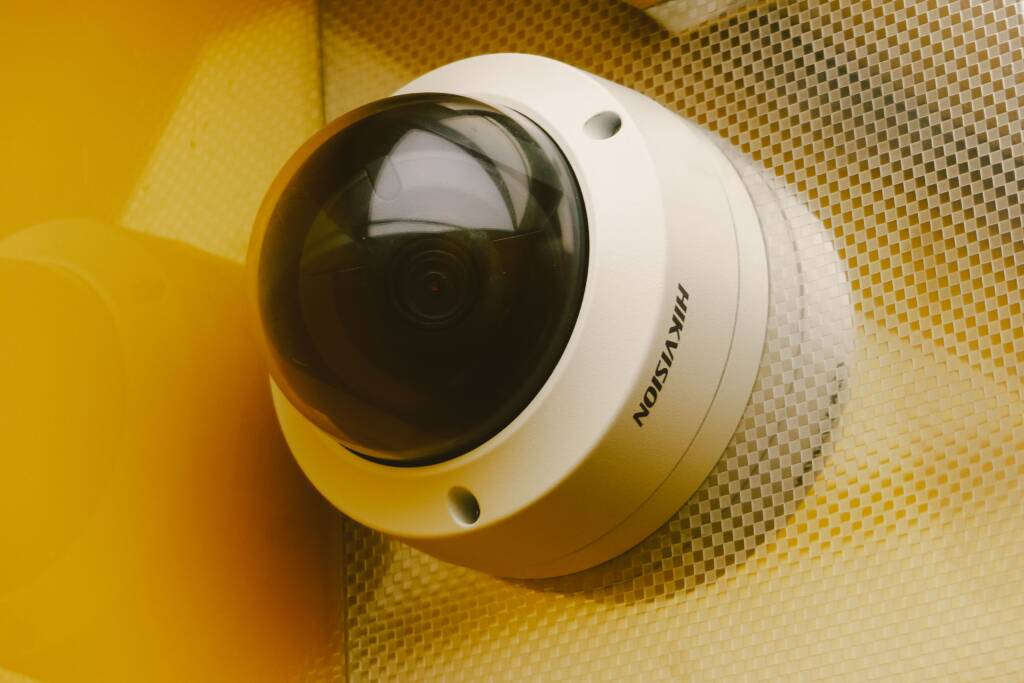
In 2026, commercial ceilings have many systems other than speakers vying for a place to dwell. Examples include CCTV cameras, sensors for air quality or occupancy (smart systems to enhance energy efficiency), PoE (Power over Ethernet) lighting, or Wireless Access Points (WAPs). There may also be other aesthetic and functional elements, like custom acoustical panels and video projectors for projection mapping that enhance overall functionality to provide the best guest, student, employee or customer experience. Careful planning is required for full functionality, concealment and maintenance, while fitting into the design intent of the room.
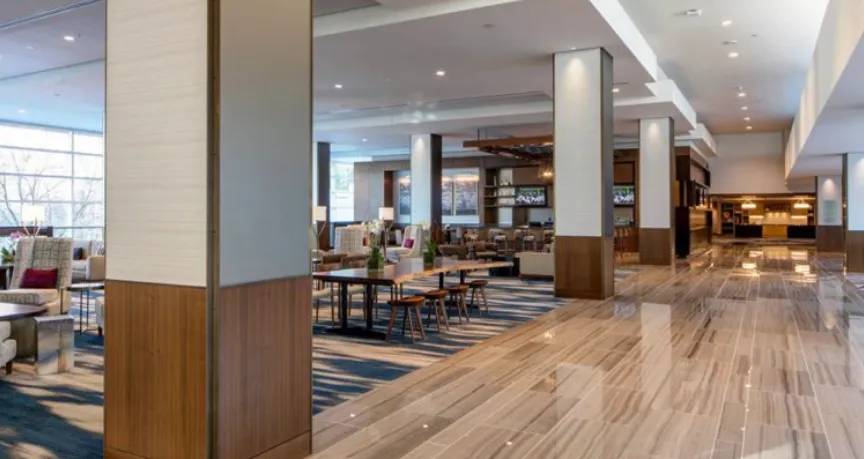
Mary Jo Sessum, a Project Manager for many NTI senior living projects, sees the requirement on every project. “On every project, we are designing the WiFi nodes and speaker placement. Each of them must consider the architect’s design vision and the available space above the ceiling which may require low profile speakers. And we have to consider the materials used in proximity to the technology that may cause interference with the technology.” These are a couple of rather common examples encountered when designing the technology for any type of commercial project. Each of them require coordination with multiple design team members. And there are many different types of ceilings so what type of ceiling is also a factor in the technology design.
One of the most common commercial ceiling designs is the suspended (or drop down) ceiling. This ceiling type offers technology-friendly features such as removable acoustical tiles which can hide ductwork, conduit or wires along with providing easy access for maintenance. And as the name suggests, acoustical tiles help manage sound well.
A simple search of the internet for ‘types of commercial building ceilings’ will identify 20 or more different types of ceilings. Not every one of those is typically used in every industry but architects are not generally using a “one type fits all” approach either. Different ceiling types use various types of materials, not all of which are technology friendly. One United Kingdom firm’s website, Interior Options, presents their 12 most popular types of office ceilings. And the office industry is just one of many industries.
A ceiling may have exposed beams or may be designed to make a statement. These ceilings are often not technology friendly so it requires quite a different effort for technology, or low voltage, designers.
If the project is not a new build, there are often other considerations. Renovation, restoration, or historic preservation projects can present challenges not usually seen in new build projects. Craig Coleman, P.E., CTS-D, an Audio Visual (AV) subject matter expert at NTI recalls, “On a recent auditorium renovation, the existing auditorium technology placement did not get considered or upgraded during the ceiling renovation of the space. Unbeknown to us, this included removing the faux ceiling closures above the stage thrust. This created a cove on the proscenium face. Speakers which had been in the faux ceiling closures in front of the stage were now located on the proscenium face (about 6 feet upstage) and were partially blocked by the cove created below. This condition created some audio coverage blind spots for some seats close to the stage had the speaker placement not been altered during the renovation.” This was a situation created by a previous renovation that did not consider the effect on existing AV systems. Craig’s redesign corrected the condition, however, it is an example of unique issues that can arise with renovations.
This is even more true with historic preservation projects which can have unique restrictions to maintain the building’s historic conditions. An historic facility with high arched or cathedral ceilings can make implementation of the technology cabling difficult. Plus, placement of, and access to the technology for maintenance can also be very challenging issues.
NTI recently worked on an historic project that was an adaptive reuse 85-year-old Art Deco department store. The new facility is planned to be a mixed-use destination with a food hall, a dozen food vendors, numerous retail areas and a second-floor entertainment venue with a screening room, plus a basement spa. NTI could not change the historical ceiling and the high-ceiling could not accommodate the desired recessed speakers. Jessica Durrence, NTI’s Project Manager for the project recalls: “We worked with the architect to create architectural cross beams at the ceiling level that hid the conduit and cabling for the speakers and other devices while also providing a structure on which the speakers and other devices could be mounted, thus preserving the historical ceiling.”
Look up as you enter any commercial building and you are likely to see technologies that dwell somewhere on the ceiling. If those technologies work as planned, blend in well and are inconspicuous, there is a very good chance that it is the result of a disciplined approach to the design including multiple coordination discussions regarding the design of those technologies throughout the design phase.